What Is Qashani? · ماهو قيشاني
What Is Qashani?
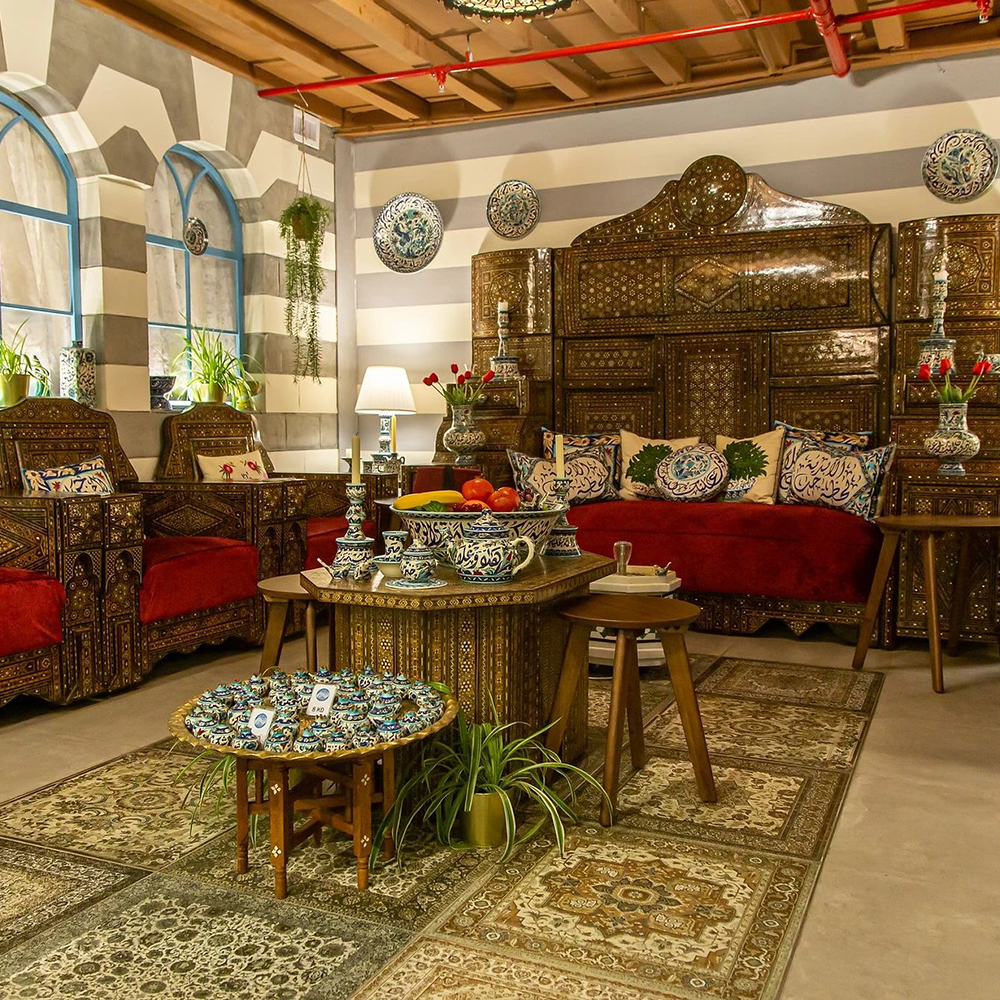
A Damascene heritage craft that adorned the walls of homes, palaces and mosques with its shine.
The craft
A white ground, black outlines and a glassy glaze
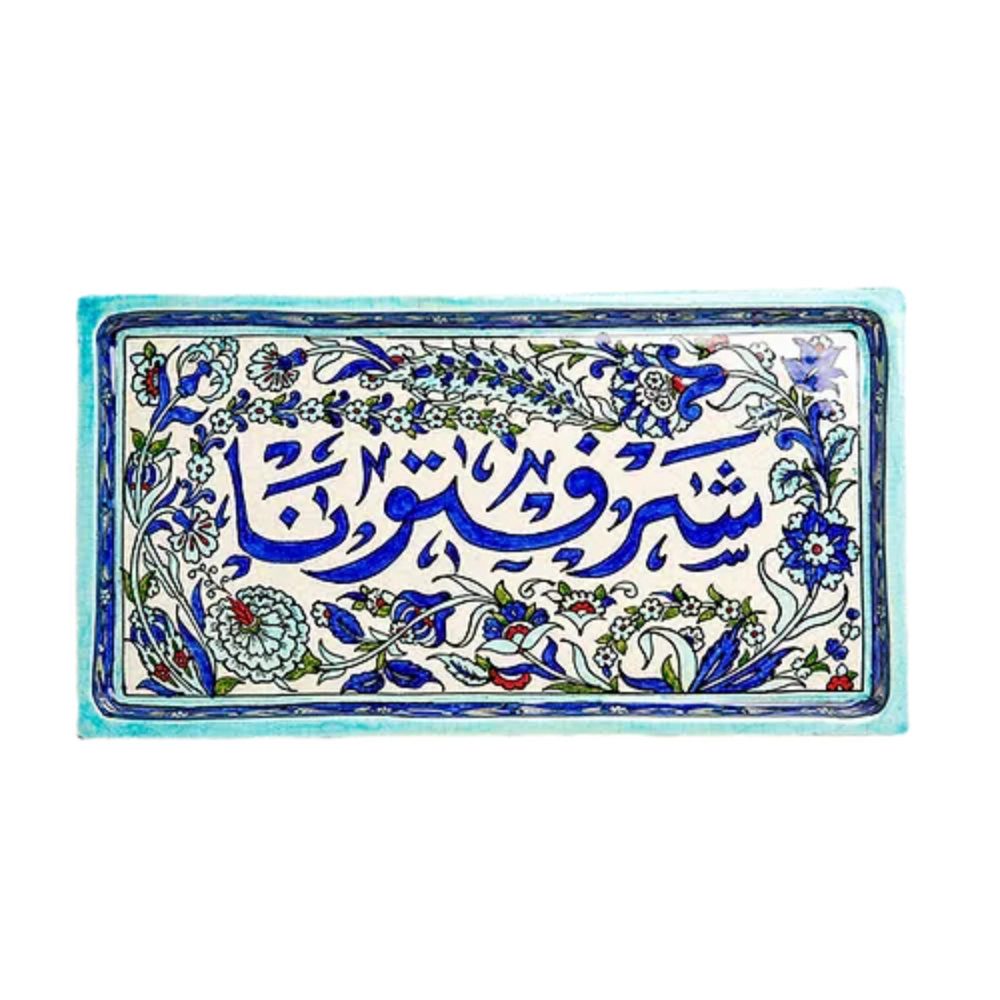
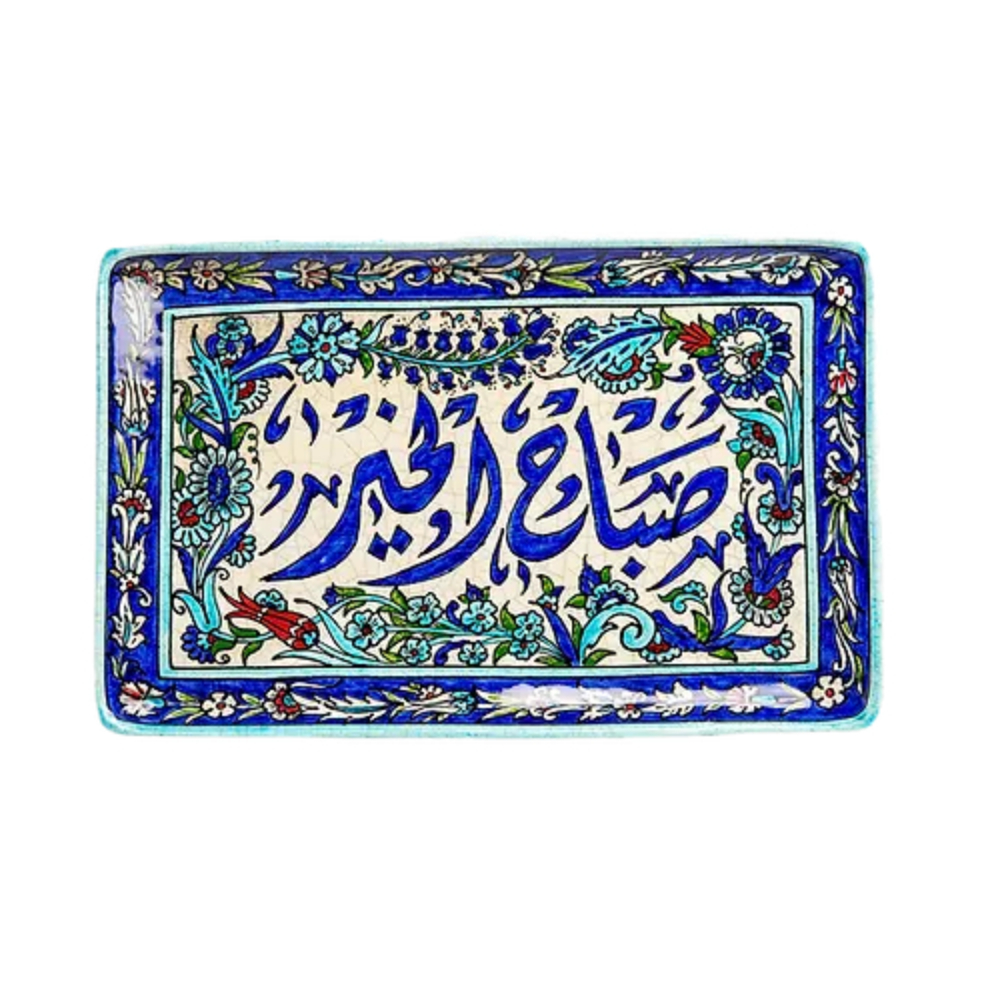
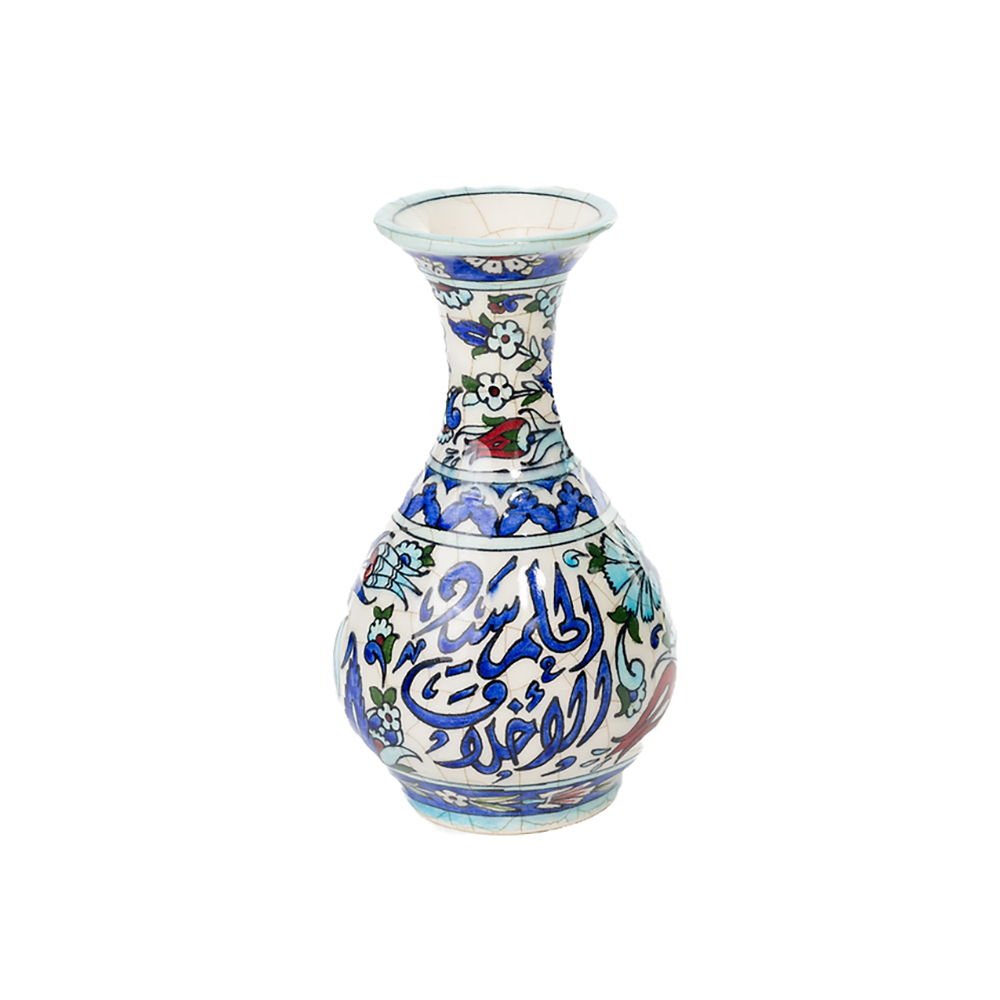
Qashani ceramics are known for a delicate white ground on which patterns outlined in black stand out, covered by a transparent glassy layer that gives each piece its shine. The patterns move between blue, navy, turquoise and green, with touches of red in light and dark shades.
Blue
Navy
Turquoise
Green
Red
Inside the workshop
The Qeshani Workshop
A film from the workshop where our pieces are shaped, painted and fired.
How it is made
From Clay to Glaze
Five steps, two firings, and every line painted by hand.
01
Step
Pure white clay
Qashani begins with pure white clay. It is sieved, soaked in water, then left to lose its excess moisture until it becomes a dough that can be shaped to the right thickness for each piece.
02
Step
Shaping
Each piece is formed by hand to the thickness it needs.
03
Step
First firing
Once shaped, the piece goes into the kiln for its first firing.
04
Step
Painting by hand
Its patterns are then drawn and coloured by hand.
05
Step
Second firing
The piece returns to the kiln for a second firing, where the heat may reach 1300 °C, and gains its shining glassy surface.
The workshop
Hands at Work
Photographs from the Qeshani workshop.
Workshop photo · coming soon
Workshop photo · coming soon
Workshop photo · coming soon
Workshop photo · coming soon
Up close
The Detail of the Hand
Look closely: every outline, every colour and every natural crackle is unique to its piece.
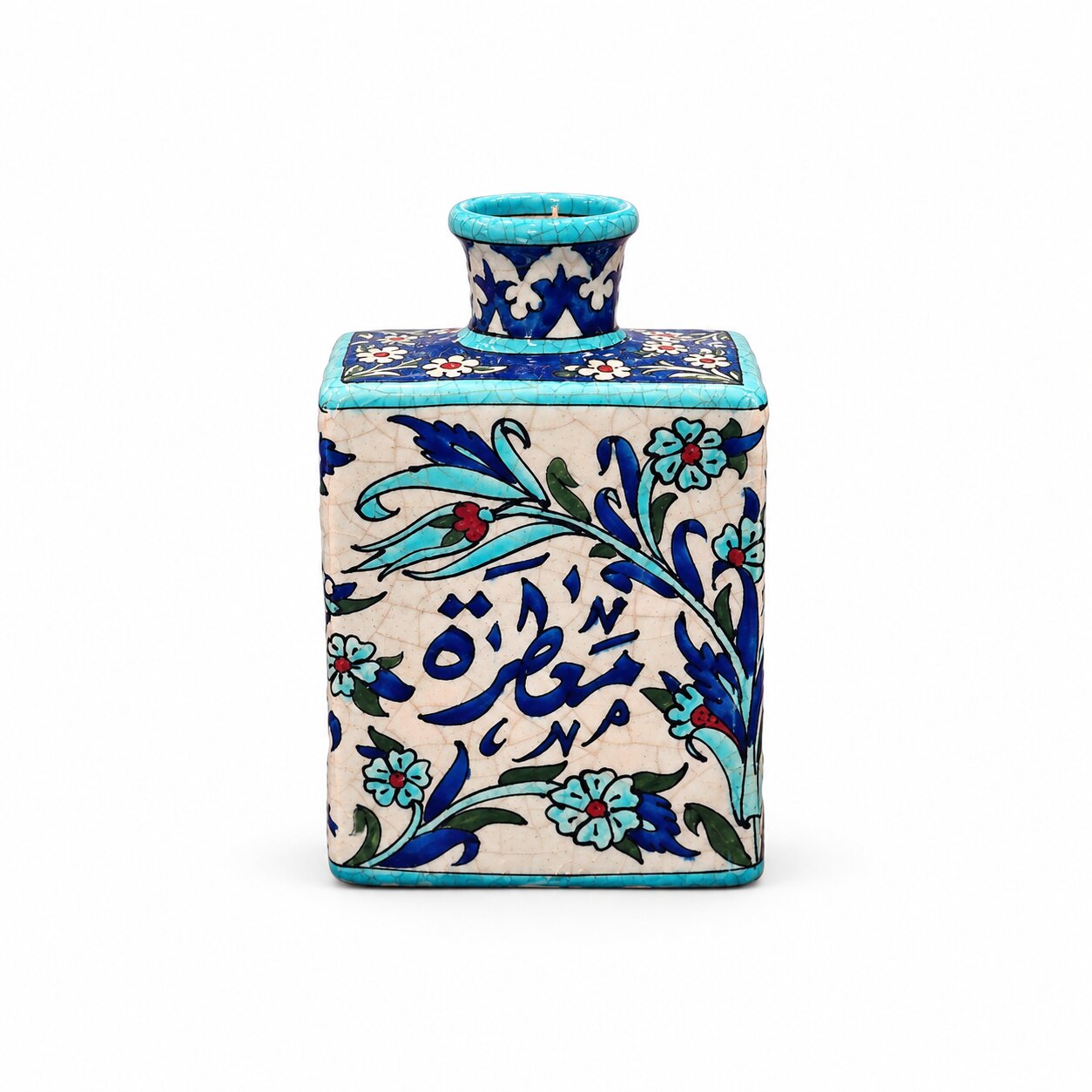
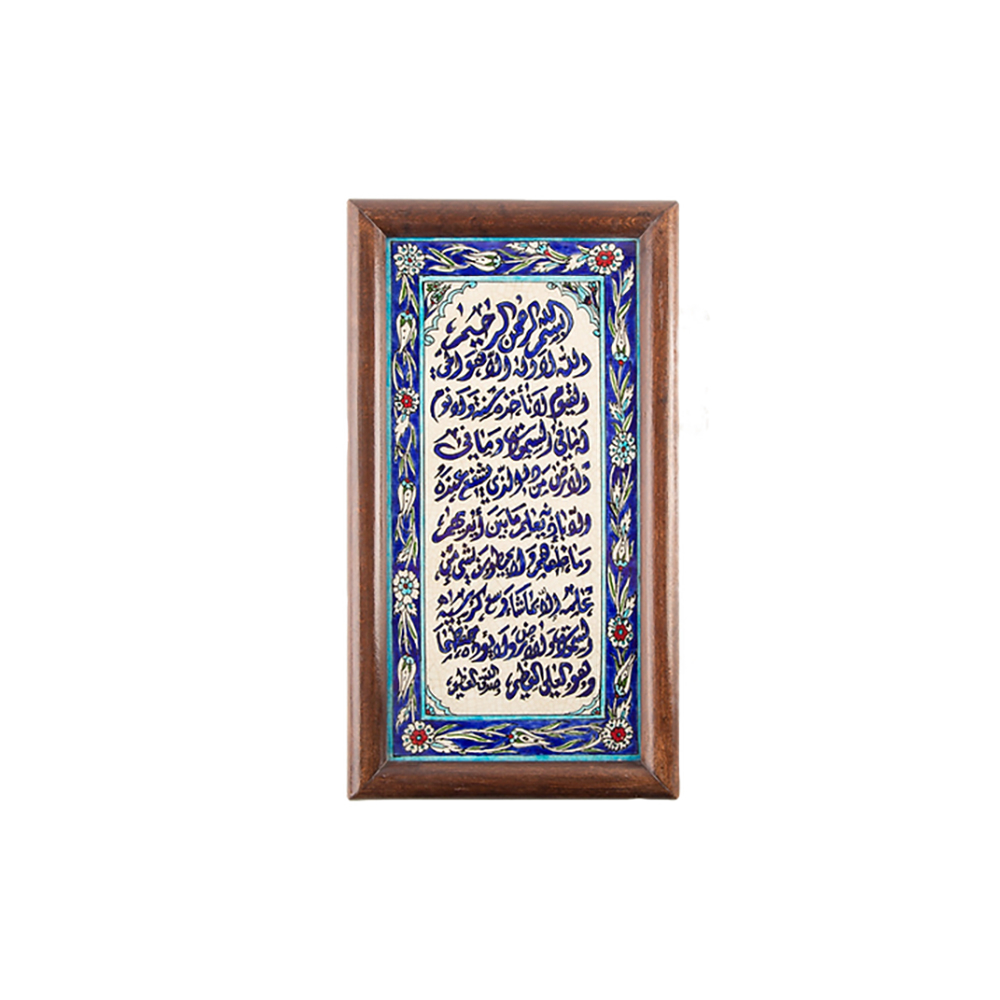
Where Qashani lives
From the Table to the Wall
Qashani is used for household dishes and serving trays, art panels and mirror frames, tables and decorated chairs.
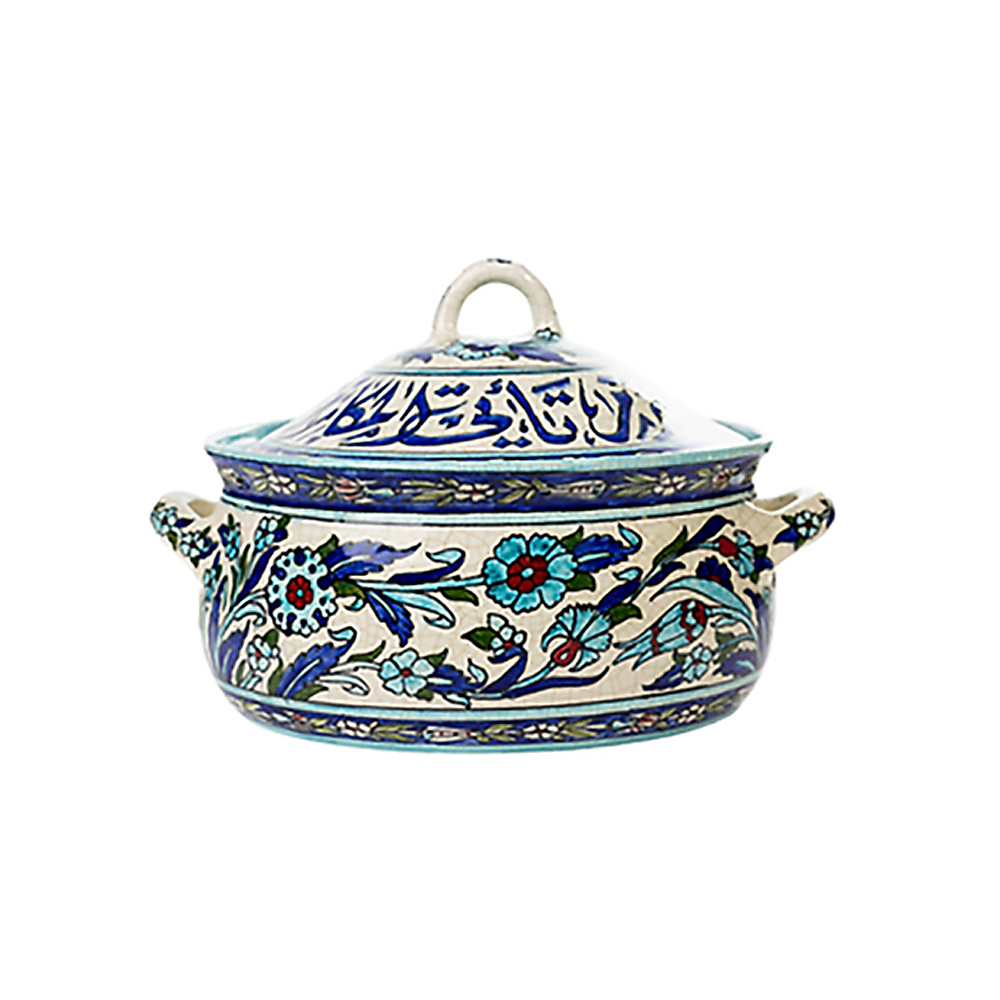
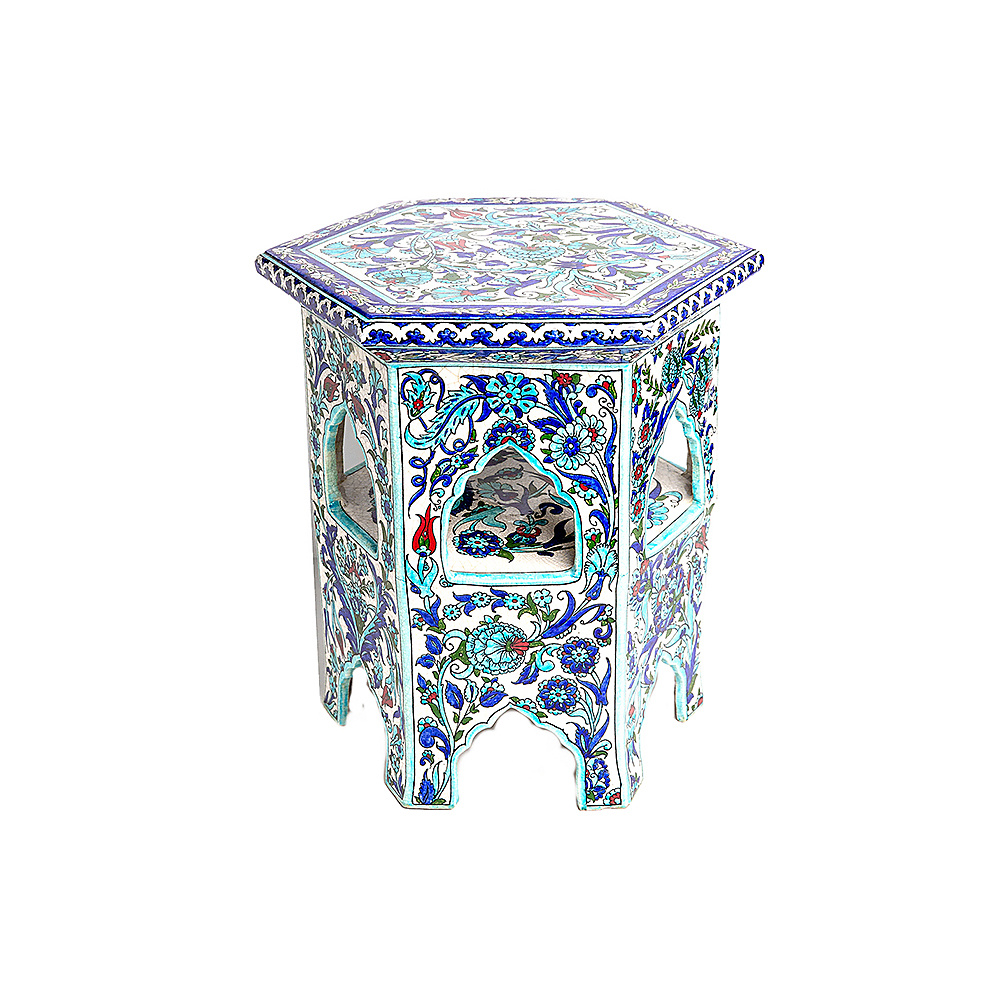
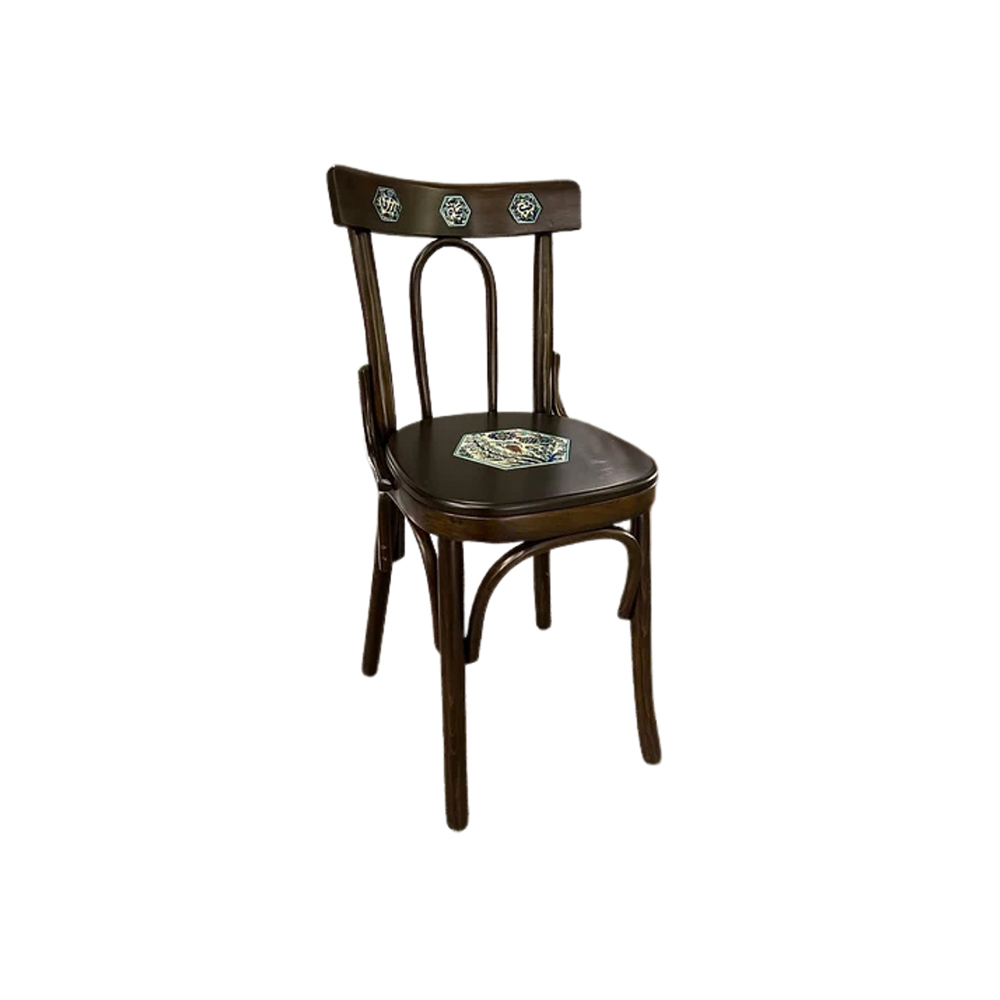
A refined choice for gifting.
Qashani pieces are a refined choice for gifting, carrying in their patterns the story of the Levantine craft, from Damascus to homes around the world.